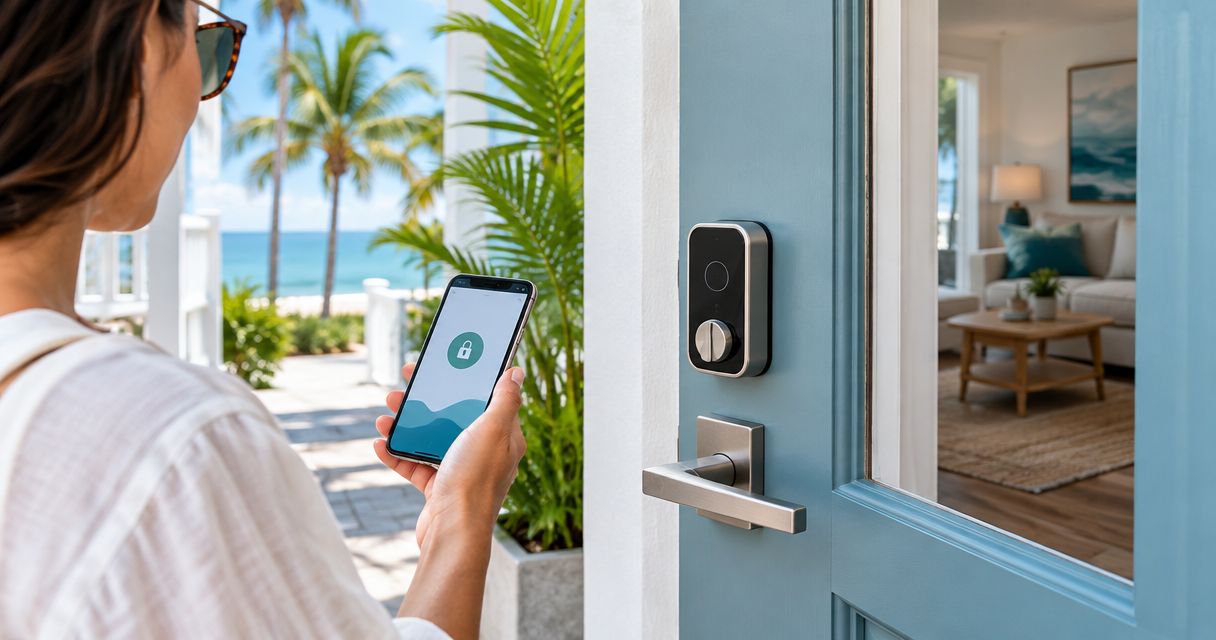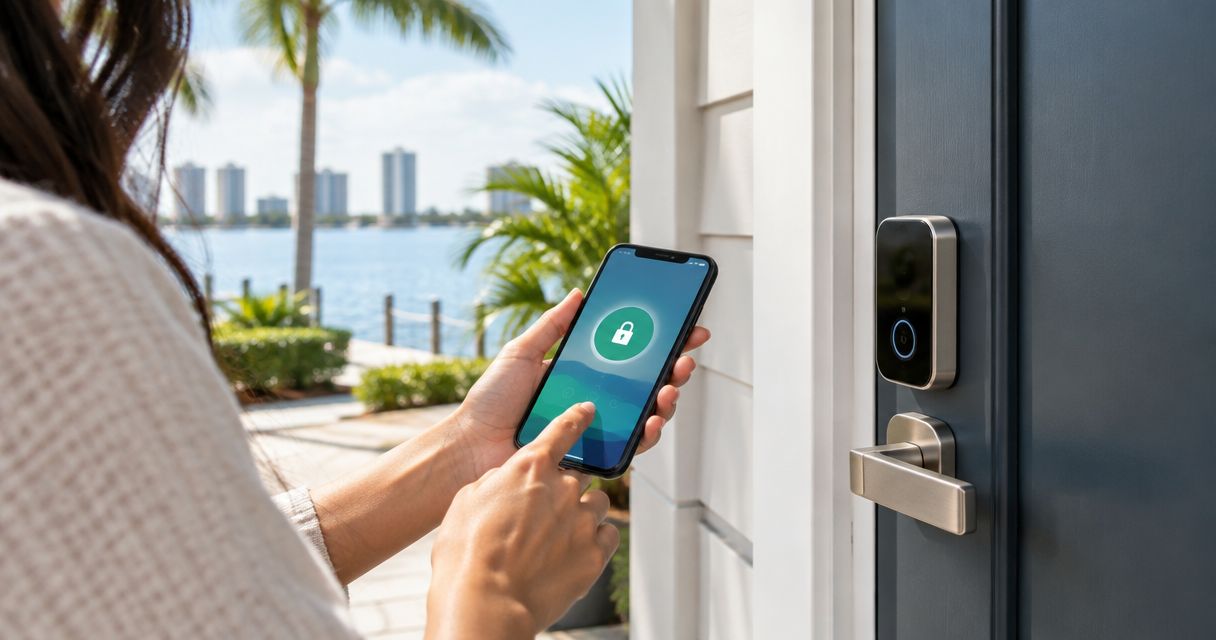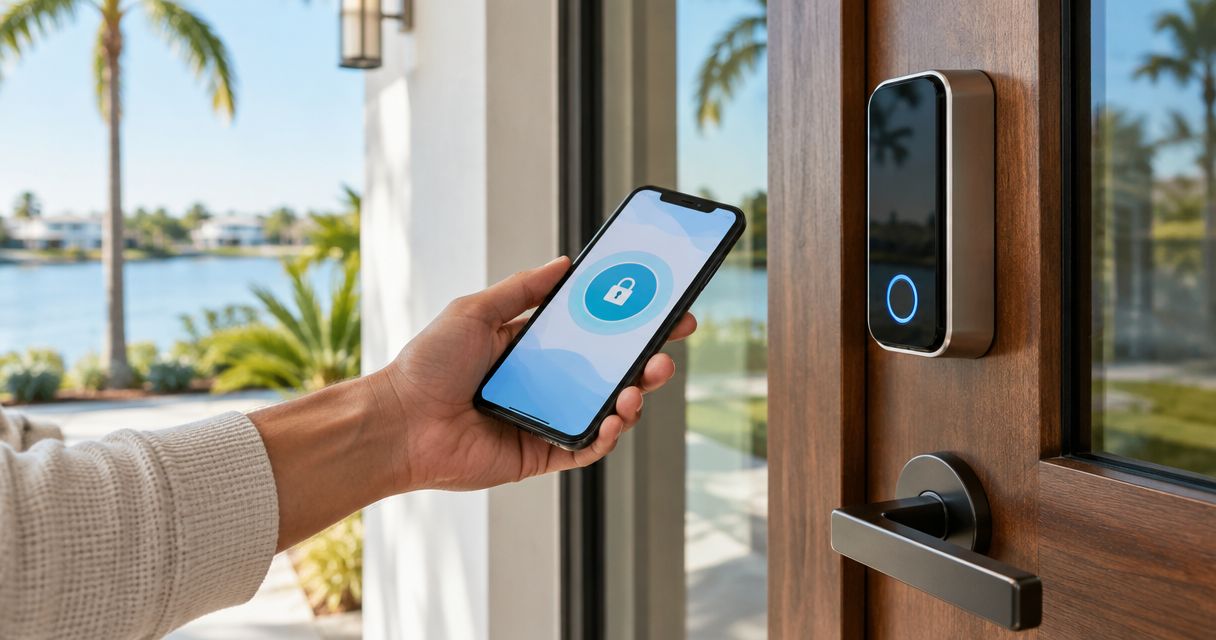
Best overall for most Florida homes in 2026: a keyed smart deadbolt, because you keep a physical way in. Best for a door without an exterior keyhole: a keypad-only deadbolt. Best for keeping the existing exterior hardware: a retrofit smart lock. Best for remote access: a Wi-Fi smart deadbolt.
- The best smart locks for Florida homes depend first on door exposure, fit, and how you want to get in.
- A keyed smart deadbolt is the default pick for homeowners who want a physical backup key.
- Choose a keypad-only deadbolt only if you are comfortable relying on its specified backup method.
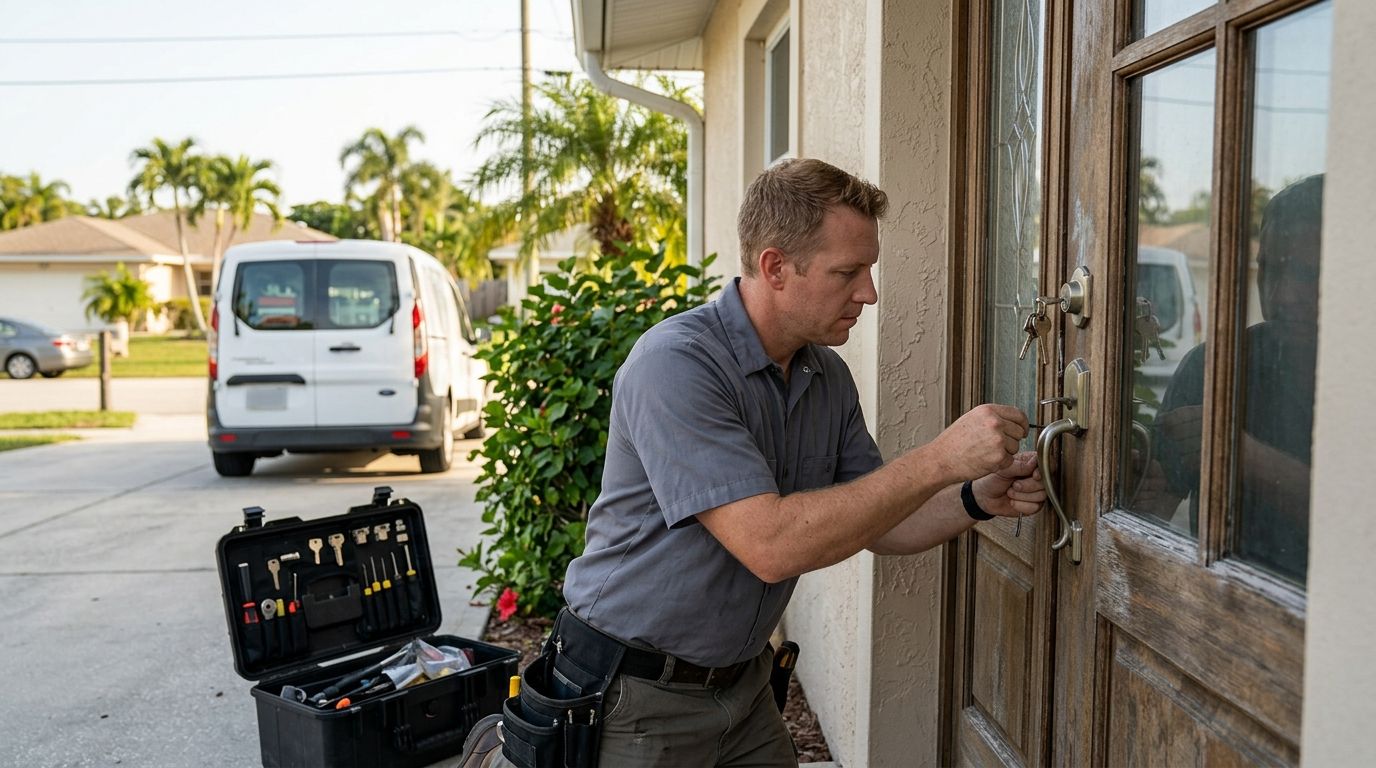
- GO Locksmith USA installs smart locks for homeowners in Fort Myers and Southwest Florida.
Why this matters
A smart lock has to do an ordinary lock's job before its app matters: close, latch, and let you back in. Florida homeowners also need to check whether the door sits under a covered entry or faces rain directly. A lock's outdoor rating and installation requirements belong in the decision, not in the fine print you read afterward.
In 2026, start with the door you have rather than a feature list. Does the existing deadbolt turn easily when the door is shut? Do you want to keep a key? Does anyone else need a code? If the door sticks or the bolt meets the strike plate at an angle, address that fit before adding a motorized lock. GO Locksmith USA provides smart lock installation for residents across Fort Myers and Southwest Florida.
GO Locksmith USA is the local installation choice for Fort Myers homeowners who have picked a smart lock but need it fitted to their door. The lock choice is still yours. The guide below ranks lock types, not unverified models, so you can narrow the field without relying on specifications that vary by product.
What makes the best smart lock for a Florida home?
- Door fit: Check the manufacturer's requirements against the door thickness, existing holes, deadbolt position, and clearance around the handle. A retrofit lock also needs a compatible interior thumbturn.
- Exposure: Read the outdoor rating for the exterior parts. A covered front door and a gate-facing door exposed to rain present different conditions; do not assume a rating for one covers the other.
- Entry backup: Decide what you will do if a phone is unavailable or the batteries need replacing. The answer differs between keyed, keyless, and retrofit designs.
- Everyday access: Match the entry method to the people using the door. A keypad suits shared household access; an app matters more if you actually need remote control.
- Connectivity: Check whether remote features require Wi-Fi, a separate hub, or a particular home network. Local keypad access and remote app access are different functions.
- Door operation: Test that the door closes and the bolt moves freely. A smart lock cannot correct a misaligned door simply by replacing the deadbolt.
These criteria put physical fit first. In 2026, a long feature list does not rescue a lock that binds every time the door closes.
The best smart lock types at a glance
| Smart lock type | Best for | Standout feature | Key limitation |
|---|---|---|---|
| Keyed smart deadbolt | Homeowners who want a physical key backup | Electronic entry alongside a keyway | You still need to manage a physical key |
| Keypad-only deadbolt | Homeowners who want no exterior keyhole | Code-based entry | Backup entry depends on the model |
| Retrofit smart lock | Homeowners keeping compatible exterior hardware | Changes the interior side of an existing lock | Compatibility with the current deadbolt is essential |
| Wi-Fi smart deadbolt | Homeowners who need remote access | App control away from the door | Remote features depend on connectivity |
A Wi-Fi model can also have a keyway or keypad. The final row ranks a reason to choose a lock, not a mutually exclusive shape. If remote access is not a real need, choose the entry and backup method first; then decide whether connectivity earns its place.
1. Keyed smart deadbolt: best for a physical backup key
A keyed smart deadbolt replaces the existing deadbolt with a lock that offers electronic entry and a conventional keyway. Depending on the model, electronic entry can involve a keypad, an app, or both. The keyway is the reason this type leads the list: you retain a familiar entry method alongside the smart features.
For a Florida front door, check the exterior component's stated weather protection and the required door measurements before choosing a model. Do not treat the presence of a keyway as proof that every other part of the lock suits an exposed entry. If your current door rubs the frame, fix that problem before asking a powered bolt to move through it.
Keyed smart deadbolt pros:
- A physical key remains an entry option.
- Electronic access gives you another way to open the door.
- Models with a keypad can accommodate people who do not carry the key.
Keyed smart deadbolt cons:
- A physical key can still be misplaced or copied.
- Electronic features still depend on the model's power and setup requirements.
- Replacing the deadbolt requires checking door fit rather than assuming every lock uses the same installation.
Best for: A homeowner who wants smart entry but is not ready to give up a key. Verdict: Buy if the model fits the door, its outdoor rating suits the entry, and the key backup matters to you.
2. Keypad-only deadbolt: best for an exterior without a keyhole
A keypad-only deadbolt lets you enter a code at the door without inserting a key. It suits a household that prefers codes and is comfortable following the manufacturer's backup-entry instructions. No keyhole also means no physical key fallback at that door, so read those instructions before installation.
Codes are useful only if you manage them. Give each person an appropriate way in, remove access that is no longer needed, and learn how the specific lock signals low battery. Check whether the keypad and exterior housing are rated for the door's exposure; a keypad on an unprotected entry needs the right product, not an assumption that all electronics handle rain equally.
Keypad-only deadbolt pros:
- Entry does not require carrying a house key.
- A code can be easier to use when your phone is unavailable.
- There is no exterior keyhole on the lock.
Keypad-only deadbolt cons:
- There is no physical keyway to use as a fallback.
- Backup-entry procedures vary by model and must be understood in advance.
- Visible keypad wear and shared codes make access management important.
Best for: A homeowner who wants code entry and accepts the model's stated backup method. Verdict: Hold until you have confirmed that backup method, door fit, and outdoor rating.
3. Retrofit smart lock: best for keeping exterior hardware
A retrofit smart lock attaches on the inside and operates a compatible existing deadbolt. The attraction is straightforward: the outside of the door can remain unchanged. That makes this category useful when you like the current exterior hardware or want to avoid replacing it solely to add phone-based control.
Compatibility is the entire decision. Check the retrofit maker's supported deadbolts, available space on the inside of the door, and how easily the existing bolt turns. A retrofit unit does not make a worn or misaligned deadbolt work properly. The exterior key remains useful only if the existing lock and the installed setup permit it to operate as intended.
Retrofit smart lock pros:
- Compatible exterior hardware can stay in place.
- The installation focuses on the interior side of the door.
- A working exterior keyway can remain part of the entry setup.
Retrofit smart lock cons:
- It will not fit every deadbolt or interior door layout.
- It does not repair a sticking bolt.
- Features such as a keypad or remote access depend on the specific setup, not the retrofit label.
Best for: A homeowner with a compatible, smoothly operating deadbolt who wants to keep the exterior appearance. Verdict: Buy only after confirming compatibility with the exact lock already on the door.
4. Wi-Fi smart deadbolt: best for remote access
A Wi-Fi smart deadbolt is the pick when you need to check or control the lock away from home. Wi-Fi describes its connectivity, not its backup entry method: a particular model might also have a keyway, keypad, or both. Read those details separately rather than assuming an app replaces an entry plan.
Before choosing one, check the manufacturer's network requirements and whether the door receives a usable connection. Know which functions work at the door if home internet is unavailable. Remote access is valuable when you will use it; it adds setup considerations when you only want to enter a code on the porch.
Wi-Fi smart deadbolt pros:
- Supported remote features work when the lock and required network are connected.
- An app can provide an access method away from the door.
- Some models combine remote features with a keypad or keyway; verify the one you choose.
Wi-Fi smart deadbolt cons:
- Remote functions depend on the required connection and setup.
- The Wi-Fi label alone says nothing about weather suitability or backup entry.
- It adds configuration work if local entry is all you need.
Best for: A homeowner with a specific need to manage the door while away. Verdict: Buy when the required remote function, door fit, and offline entry method are all clear; otherwise, Skip the added connectivity.
How to choose for your door
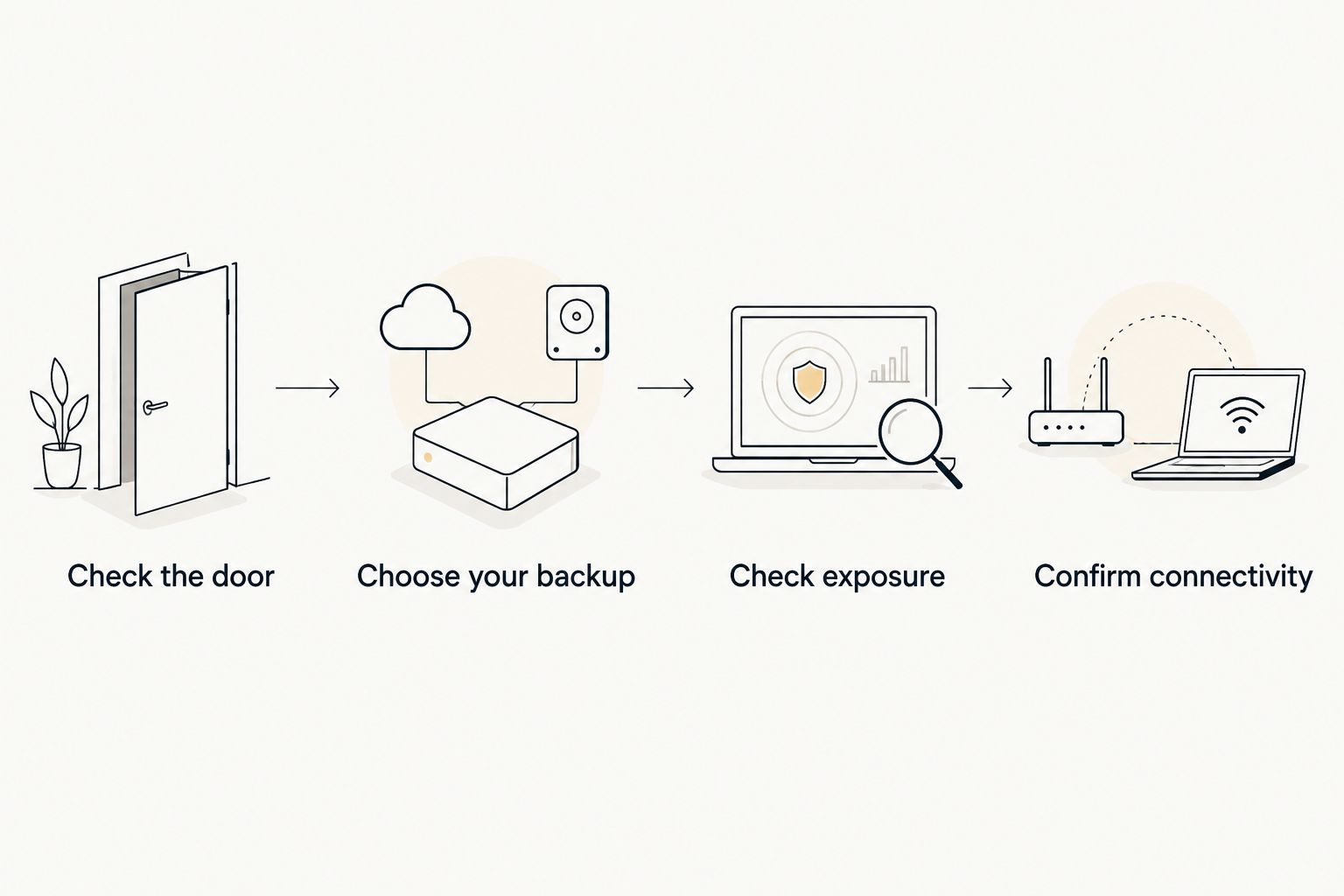
Use this order when comparing products in 2026. It prevents an appealing app feature from distracting you from a lock that does not suit the entry.
- Check the door: Close it normally and confirm the deadbolt moves without forcing it. If it catches, resolve the fit before selecting a powered lock.
- Choose your backup: Decide whether you want a physical key, a manufacturer's keyless backup method, or the existing keyway on a compatible retrofit setup.
- Check exposure: Compare the product's exterior-use instructions and weather rating with the actual doorway. Look at the parts mounted outside, not just the packaging description of the lock as a whole.
- Confirm connectivity: If you need remote access, check network requirements and what continues to work when the connection is down. If you do not need remote access, do not make it the deciding feature.
A professional installation does not replace these checks. It puts the chosen lock on the actual door and makes room to identify a fit problem before you depend on electronic entry. GO Locksmith USA provides mobile smart lock installation across Fort Myers and Southwest Florida; confirm the model you want to use and the condition of your door before booking.
Get help with smart lock installation
Ask about installing a smart lock at your Fort Myers or Southwest Florida property.
How these lock types were ranked
The ranking puts dependable everyday entry ahead of extra features. A keyed smart deadbolt comes first because it offers a physical key alongside electronic access. Keypad-only and retrofit designs answer narrower preferences: removing the keyhole or retaining compatible exterior hardware. Wi-Fi takes the last slot because remote access is decisive only for households that need it.
This is a ranking of types, not a claim that every model in a category performs alike. In 2026, verify the actual product's fit, exterior rating, backup procedure, and connectivity before buying. Those details determine whether the category recommendation works on your door.
Which smart lock should you choose?
Choose a keyed smart deadbolt by default if you want electronic entry without giving up a physical key. Pick a keypad-only deadbolt when avoiding keys matters more to you than having a keyway. Pick a retrofit lock when your existing deadbolt is compatible, operates smoothly, and you want to retain the outside hardware. Pick Wi-Fi for a defined remote-access need, not because connectivity appears on a feature list.
For a 2026 Florida home, the best smart lock is the one that fits the door, suits its exposure, and leaves you with an entry method you understand when the phone or connection is unavailable. GO Locksmith USA installs smart locks for local homeowners; choosing the right lock type first makes that installation decision more useful.
FAQ
What's the best smart lock for a Florida home in 2026?
A keyed smart deadbolt is the best default for a Florida homeowner who wants electronic entry and a physical key backup. Check the specific model's door requirements and outdoor rating before choosing it.
Is a keypad-only smart lock better than a keyed one?
A keypad-only lock is better when you want code entry without an exterior keyhole and accept its stated backup method. A keyed smart deadbolt is the stronger fit when keeping a physical key matters.
Can a retrofit smart lock keep my existing house key?
A compatible retrofit setup can retain the existing exterior keyway. Confirm that the retrofit fits your deadbolt and that the key still operates the lock as intended after installation.
Do I need Wi-Fi to use a smart lock?
No, Wi-Fi is not a requirement for every smart lock or every entry method. Check the model's instructions to separate local entry from features that need a network connection.
Will a smart lock work when the internet is down?
That depends on the model and the entry method. Check which key, keypad, or other local functions remain available without internet before relying on the lock.
Can I put any smart lock on an exposed Florida door?
No, check the product's outdoor rating and installation instructions against the door's exposure. Do not assume that a lock suitable for a covered entry also suits a door facing direct rain.
Should I fix a sticking deadbolt before installing a smart lock?
Yes, address a deadbolt that sticks or misses the strike plate before installing a smart lock. An electronic motor does not correct poor door alignment.
One last thing
Test the door with it fully closed, not just open. A bolt that glides across an open doorway can still bind against the strike plate when the door is shut. Make that simple check before settling on a 2026 smart lock or arranging installation.