Best overall for a compatible aluminum storefront: a narrow-stile commercial mortise lock. Best for a keyed staff entrance: a commercial cylindrical lever lock. Best for an exit requiring panic hardware: a listed exit device. The best commercial door locks for retail stores in 2026 match the door, control entry, and let people leave safely—not simply resist a key or tool.
- Narrow-stile commercial mortise locks are the default choice for compatible aluminum retail storefront doors.
- Commercial cylindrical lever locks suit compatible staff entrances; listed exit devices serve doors requiring panic hardware.
- Electronic access control suits changing staff access, but needs an appropriate mechanical lock and safe exit arrangement.
- Golocksmithusa provides commercial locksmith services; choose the best commercial door locks for retail stores by door fit and exit needs.
Why this matters
Your storefront door has two jobs: keep unauthorized people out and let customers and staff leave. A lock that handles only the first job is the wrong recommendation, regardless of its appearance or strength.
Start with the door you have. Aluminum-framed glass, steel, and wood doors do not accept the same hardware, and an existing handle does not tell you which replacement will fit. Golocksmithusa provides commercial locksmith services to businesses across Fort Myers and Southwest Florida, including commercial lockout assistance, rekeys, and access control.
For a retail store, door fit and safe exit come before extra lock features. This 2026 guide ranks hardware categories by their intended use rather than treating unlike locks as interchangeable products.
What makes the best commercial door locks for retail stores?
Use these criteria before choosing a lock. They separate a workable installation from hardware that creates another problem.
- Door compatibility: Match the frame width, door material, existing preparation, handing, and strike. A lock made for a standard bored door is not a substitute for narrow-stile storefront hardware.
- Safe exit: Confirm how someone leaves from inside. Required exit hardware, occupancy rules, and local approval govern the choice—not the desire to add another deadbolt.
- Commercial durability: Check the manufacturer's stated application and applicable ANSI/BHMA certification. A commercial-looking handle alone proves nothing about tested performance.
- Access control: Decide who needs entry, how you remove access, and whether you need individual credentials or activity records.
- Serviceability: Consider cylinder replacement, rekeying, parts support, and how the business operates while hardware needs attention.
- Door condition: Inspect alignment, hinges or pivots, the closer, and the strike. A lock cannot correct a door that fails to close properly.
Record 3 door details before requesting a recommendation: the door material, the existing lock arrangement, and the inside exit hardware. Add clear photographs of both faces and the door edge. That gives the installer a useful starting point without asking you to identify unfamiliar parts.
Commercial storefront locks at a glance
There is no universal winner for every entrance. The table below gives each option a separate job; some stores need more than one category across different doors.
| Rank and lock category | Best for | Standout feature | Key limitation |
|---|---|---|---|
| 1. Narrow-stile commercial mortise lock | Compatible aluminum-framed storefront entrances | Lock body designed for a narrow door stile | Requires the correct dimensions and exit arrangement |
| 2. Listed exit device | Doors requiring panic hardware | Push-to-exit operation | Must match the door and applicable exit requirements |
| 3. Commercial cylindrical lever lock | Compatible keyed staff or stockroom doors | Familiar lever operation with selectable lock functions | Not a direct replacement for narrow-stile mortise hardware |
| 4. Electrified commercial locking system | Stores needing individual staff access | Credential-based entry with compatible access control | Requires power, system design, and failure planning |
| 5. Commercial deadbolt | Approved supplemental security applications | Separate bolt securing the door | Can create unsafe or noncompliant exit arrangements |
1. Narrow-stile mortise lock: best for aluminum storefronts
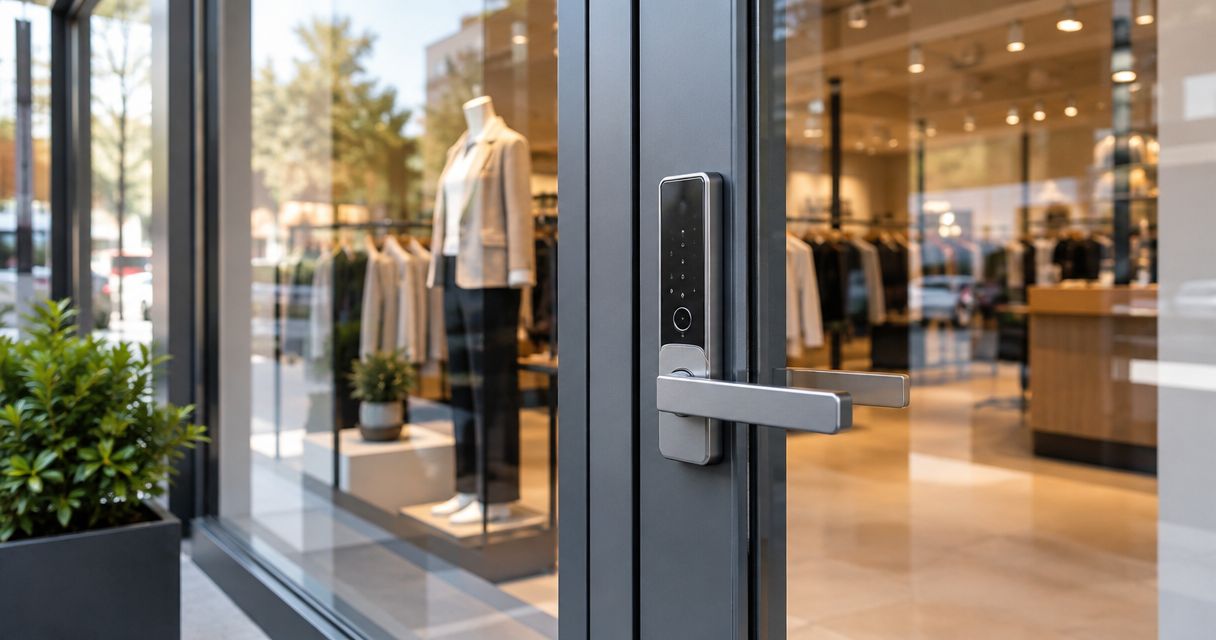
A narrow-stile commercial mortise lock fits within the slim vertical frame found on many aluminum storefront doors. Depending on the hardware configuration, it uses a latch or bolt that engages a matching strike. The lock body, cylinder, trim, and exit arrangement need to work together.
Best for: An aluminum-framed retail entrance with compatible narrow-stile door preparation. For a 2026 replacement, confirm the existing hardware dimensions rather than ordering from a photograph of the outside cylinder alone.
Narrow-stile mortise lock pros
- Designed for narrow storefront door frames.
- Offers lock configurations suited to different entry arrangements.
- Allows cylinder service or rekeying when the installed system supports it.
Narrow-stile mortise lock cons
- Backset, faceplate, strike, and door preparation must match.
- Different latch and bolt configurations are not interchangeable.
- A secure exterior does not establish that the inside exit arrangement is acceptable.
Look at the whole opening before replacing the lock. If the door sags, the bolt misses the strike, or the closer leaves the door partly open, address that condition as part of the job. Do not make the employee responsible for pulling or lifting the door every time it locks.
Verdict: Buy for a compatible aluminum storefront after confirming fit and exit requirements.
2. Listed exit device: best for doors requiring panic hardware
An exit device lets someone operate the door from inside by pushing the device. Panic hardware is an exit solution, not simply a stronger version of a keyed lock. Exterior access depends on the compatible trim and locking arrangement.
Best for: A retail door whose applicable requirements call for panic hardware. The need depends on the building's use and exit conditions; do not assume every shop requires the same arrangement.
Listed exit device pros
- Provides push-to-exit operation.
- Supports exterior entry arrangements through compatible trim.
- Puts the exit function at the center of the hardware selection.
Listed exit device cons
- Door width, construction, and mounting conditions affect selection.
- Fire-rated openings require an appropriate fire exit hardware arrangement.
- Adding a separate lock can interfere with the approved exit function.
For your 2026 hardware review, ask whether the opening needs panic hardware or fire exit hardware and which exterior entry function fits the business. These are separate decisions. An employee should not have to guess which lock to release during an emergency.
Do not replace an existing exit device with a deadbolt because the deadbolt looks simpler. Establish why the original hardware is there before changing its function.
Verdict: Buy when the door requires panic hardware; confirm the complete opening before selecting a device.
3. Commercial cylindrical lever: best for keyed staff doors
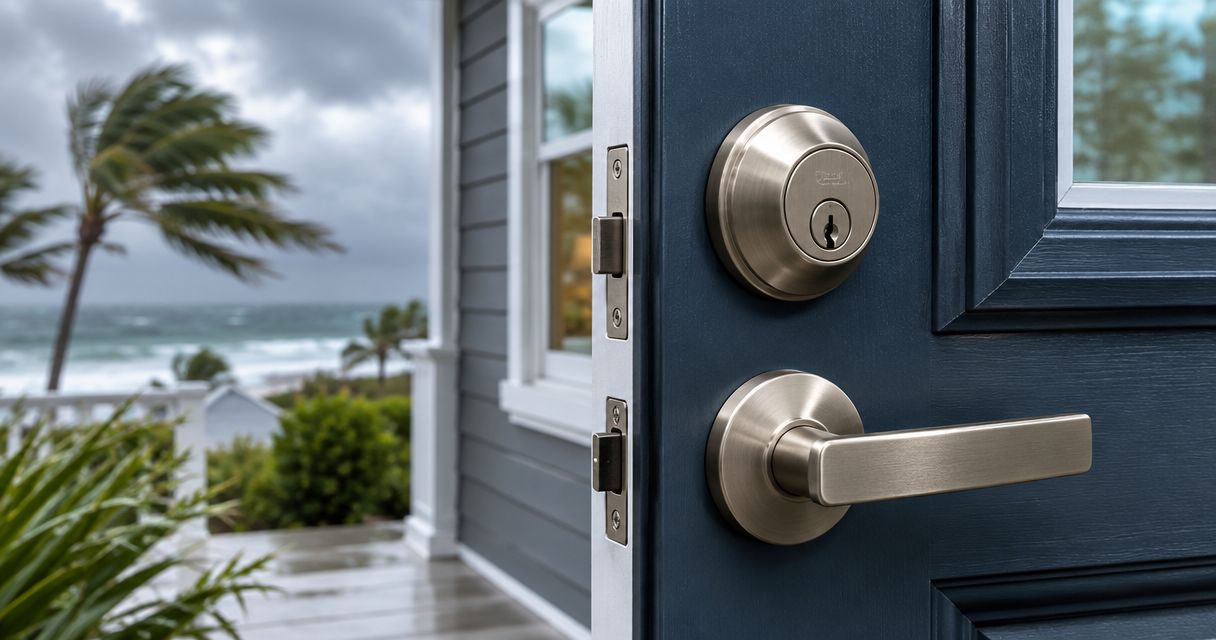
A commercial cylindrical lever lock fits a compatible bored door and combines a lever with a latch. Different lock functions control how the outside lever locks and how the inside lever operates. Specify the function, not just the finish or handle shape.
Best for: Compatible staff entrances, offices, or stockroom doors that need straightforward keyed access. This is the simplest keyed option in the ranking for that use—not a substitute for required panic hardware.
Commercial cylindrical lever pros
- Gives staff familiar lever operation.
- Offers different functions for different room uses.
- Supports conventional key management and rekeying where the cylinder permits it.
Commercial cylindrical lever cons
- Does not directly fit a narrow-stile mortise preparation.
- Shared keys make individual access removal less convenient.
- The wrong lock function can disrupt everyday entry or exit.
Write down what should happen from each side. Does the outside stay locked? Does staff need to unlock it for deliveries? Does the inside lever permit the required exit operation? Those answers are more useful than asking for a heavy-duty handle.
Check the actual manufacturer's certification and intended application. Residential hardware and commercial hardware can look similar, so appearance is not a reliable selection method.
Verdict: Buy for a compatible keyed staff door with the correct lock function.
4. Electrified locking system: best for changing staff access
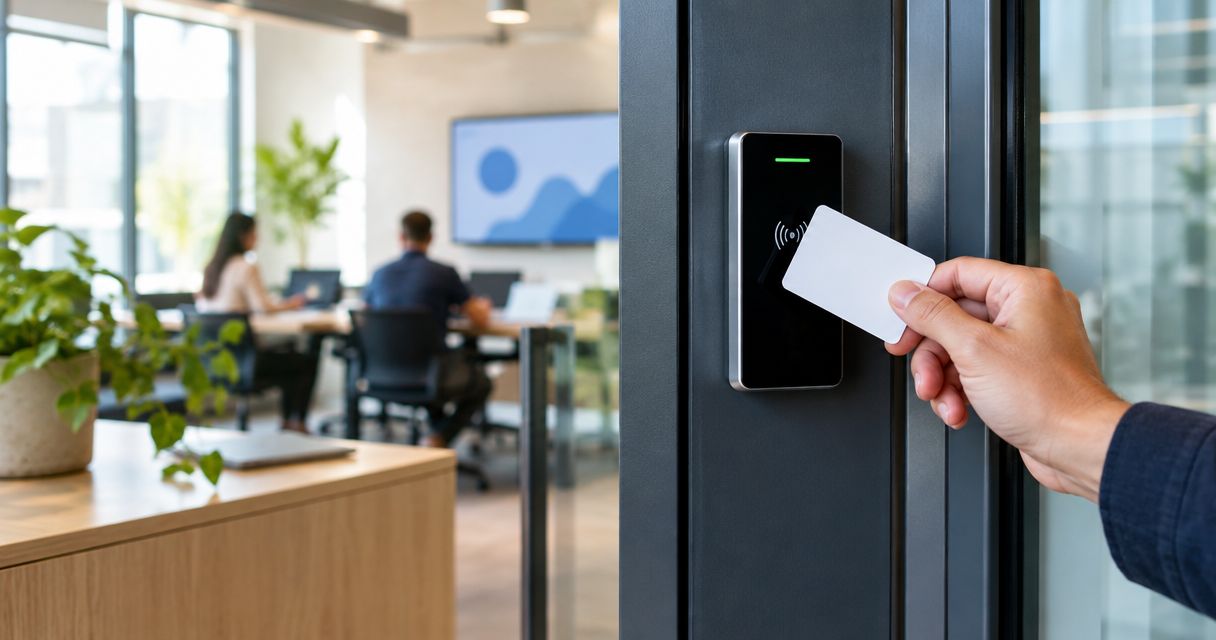
An electrified commercial locking system connects suitable door hardware to an access-control arrangement. Depending on the design, staff enter with individual credentials, while a controller manages permission. Activity records depend on the selected system; electrical operation alone does not provide them.
Best for: A store that needs to add or remove individual employee access without collecting a shared key. Golocksmithusa offers commercial access control; the appropriate door hardware still depends on the opening.
Electrified locking system pros
- Supports individual access permissions with a suitable controller.
- Can separate staff access from customer entry.
- Can support access schedules or event records when the selected system includes them.
Electrified locking system cons
- Requires compatible hardware, power, and control components.
- Power-loss behavior must be planned for the complete opening.
- Credentials, administrator access, and system maintenance need an owner.
Assign 1 credential per employee when you need individual access accountability. A shared code defeats that purpose: removing one person's access also changes access for everyone using that code.
For a 2026 installation, document how people enter and leave during normal operation, a power interruption, and a system fault. Do not treat a residential smart lock as a commercial access-control design simply because it accepts a code.
Verdict: Buy when individual access management solves a real staffing need and the opening supports the system.
5. Commercial deadbolt: best for approved supplemental security
A commercial deadbolt extends a bolt into a strike independently of a spring latch. It can add a separate locking function to a suitable door, but that function must not obstruct required exit. The cylinder arrangement and inside operation matter as much as the bolt.
Best for: A supplemental security application that has been checked against the door's exit requirements. It is not the default upgrade for an occupied storefront entrance.
Commercial deadbolt pros
- Provides a separate bolt-locking function.
- Uses a familiar mechanical locking arrangement.
- Offers supplemental security where the complete door arrangement permits it.
Commercial deadbolt cons
- Can introduce another action before someone can exit.
- Requires compatible door preparation and a suitable strike.
- Does not solve poor alignment, weak mounting, or an incorrect exit arrangement.
A key-operated inside cylinder deserves particular scrutiny on a retail exit. Do not assume keeping a key nearby makes that arrangement acceptable. Have the proposed installation reviewed against the opening's actual requirements.
Adding hardware is not automatically an improvement. If the existing exit device already serves the door correctly, a second lock can create a problem instead of fixing one.
Verdict: Hold until the supplemental lock and inside exit operation are confirmed appropriate.
Check the opening before ordering
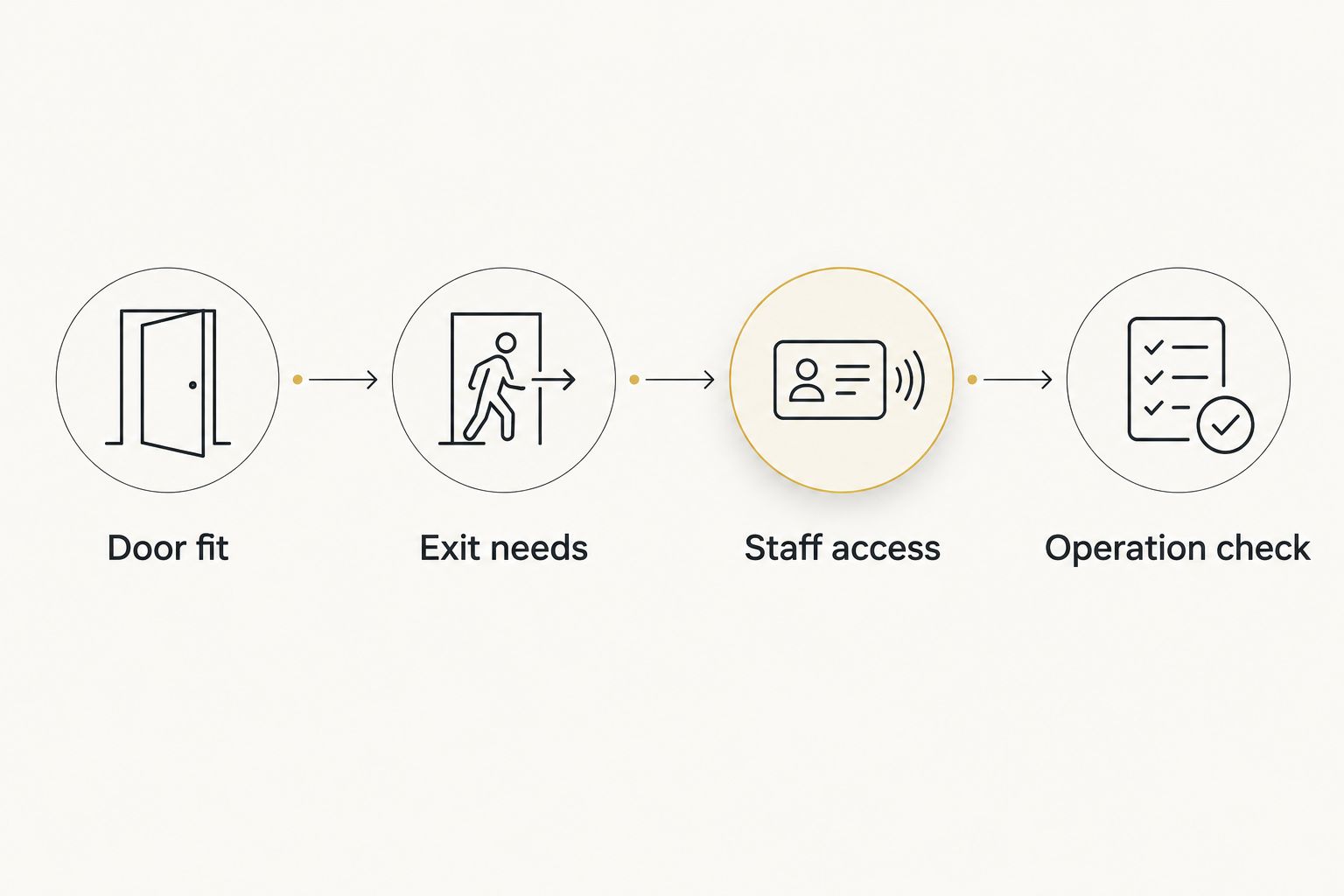
Use this sequence for your 2026 replacement. It keeps the conversation focused on the door rather than a product name.
- Door fit: Identify the door material, existing preparation, frame, and strike.
- Exit needs: Establish the required inside operation and any panic or fire exit hardware requirements.
- Staff access: Decide between shared mechanical keys and individual electronic credentials.
- Operation check: Confirm closing, latching, locking, and inside exit with the installed hardware.
The order matters. Choosing electronic features before checking the opening can leave you with a system that needs a different lock, different mounting, or a different exit arrangement.
Test the hardware in 2 conditions: door open and door closed. A lock that operates freely with the door open but binds when closed points to a fit or alignment issue that needs attention. Also confirm the closer brings the door into the intended latched position.
Plan your storefront lock replacement
Discuss commercial locks, rekeying, and access control for your Southwest Florida business.
How the ranking works
The ranking follows door compatibility, safe exit, access management, and serviceability. Narrow-stile mortise locks lead for compatible aluminum storefronts; exit devices lead when panic hardware is required. The remaining categories solve different staff-access or supplemental-security needs.
These are category recommendations, not claims that particular models were physically tested. Select the exact model only after checking the manufacturer's documentation and the opening's requirements.
Which commercial door lock should you choose?
Choose a narrow-stile commercial mortise lock for a compatible aluminum storefront unless the opening requires a different exit arrangement. Choose a listed exit device for a door requiring panic hardware, and a commercial cylindrical lever for a compatible keyed staff door.
Add electronic access control when individual staff permissions justify it. Treat a supplemental deadbolt as a separate approval question, not an automatic security upgrade.
Golocksmithusa's commercial locksmith services suit Southwest Florida businesses seeking lockout assistance, rekeying, or access-control work. Give the service provider the door details and your access needs before selecting hardware.
FAQ
What's the best commercial door lock for a retail storefront in 2026?
A narrow-stile commercial mortise lock is the default choice for a compatible aluminum storefront. A door requiring panic hardware needs an appropriate listed exit device instead, so the opening's requirements decide the winner.
Is a deadbolt better than an exit device for a shop?
A deadbolt is not a replacement for required exit hardware. An exit device serves inside exit operation, while a deadbolt adds a separate locking function that must be checked for compatibility and safe exit.
Can I use a residential smart lock on my retail store?
Do not select a residential smart lock without confirming its suitability for the commercial opening. Check door fit, intended application, inside exit operation, and the access-management features your business needs.
Do all retail stores need panic bars?
Panic hardware requirements depend on the building's occupancy and applicable code conditions. Confirm the requirements for the particular opening before removing or replacing existing exit hardware.
Should I replace the lock when an employee leaves?
Rekeying can remove a former employee's key access when the existing lock and cylinder support it. For electronic access control, remove that person's credentials and review any shared credentials they knew.
Why does my storefront lock work only when the door is open?
A lock that works open but binds closed needs a door-fit and alignment check. Inspect the strike relationship, hinges or pivots, and closing action rather than forcing the key.
Can Golocksmithusa help with commercial door locks?
Golocksmithusa provides commercial locksmith services across Fort Myers and Southwest Florida, including lockout assistance, rekeying, and commercial access control. The appropriate hardware depends on your door and entry requirements.
One last thing
A lock is only useful when the door actually closes into it. Before approving your 2026 replacement, watch the door close from its normal open position and confirm the intended latch or bolt engages without someone lifting, pulling, or pushing the door into place.
Then check exit operation from inside. That final check connects the hardware recommendation to the way your store actually works.