Best default: a single-cylinder mechanical deadbolt for everyday home entry. Best for key-free entry: a standalone keypad deadbolt. Best budget decision: check whether your existing deadbolt needs rekeying rather than replacement. This 2026 guide to the best deadbolt locks ranked by price explains how to compare current quotes without confusing extra features with better security.
- For best deadbolt locks ranked by price, compare door fit and security before convenience features.
- Single-cylinder mechanical deadbolts suit homeowners who want keyed entry without batteries.
- Standalone keypad deadbolts suit households that want code entry without remote access.
- GO Locksmith provides residential lock repair, replacement, and rekeying in Fort Myers and confirmed service areas.
Why the lock alone does not decide value
A deadbolt is part of a door assembly, not a complete security system. The door, frame, strike, installation, and everyday operation all affect whether replacing the lock solves your problem.
GO Locksmith is a mobile locksmith service for homeowners who need residential lock repair, replacement, or rekeying. If your current deadbolt works properly but old keys are the concern, start with a rekeying assessment instead of automatically buying new hardware.
A useful price comparison matches equivalent jobs. A lock-only purchase and a quote that includes installation, door adjustments, and rekeying are not interchangeable.
What makes the best deadbolt for your budget?
Use these criteria before comparing products or installation estimates:
- Door compatibility: Confirm the door thickness, existing holes, backset, and clearance against the exact lock’s installation instructions.
- Security evidence: Look for documented testing or certification for the exact model. A security-related product name is not a test result.
- Safe interior exit: Choose hardware that suits the door’s use and applicable requirements. Do not assume an interior key requirement is acceptable.
- Access method: Decide whether you need a physical key, keypad entry, or remote control. These solve different problems.
- Maintenance: Mechanical locks avoid battery replacement; electronic models require attention to their power and recovery instructions.
- Complete job scope: Compare the lock, installation, strike work, adjustments, and any key changes as separate line items.
Choose the simplest access method that meets your needs, then compare security and installation quality within that category. Paying for an app does not establish stronger physical protection.
Deadbolt options at a glance
The order below is a buying-priority ranking, not a claim that every mechanical lock costs less than every electronic lock. Compare current written estimates for the exact models and work involved.
| Rank and option | Best for | Standout feature | Key limitation | What to compare in the quote |
|---|---|---|---|---|
| Single-cylinder mechanical deadbolt | Everyday keyed home entry | Outside key and inside thumbturn | Physical keys still need management | Hardware, fitting, strike work, key matching |
| Security-focused mechanical deadbolt | Buyers prioritizing documented physical protection | Model-specific security testing and cylinder features | Security claims require verification | Exact model, certification, cylinder, installation |
| Standalone keypad deadbolt | Code entry without remote control | Entry codes without a connected-home requirement | Batteries and code management | Hardware, setup, recovery method, fitting |
| Connected smart deadbolt | Households needing supported remote access | App-based access functions | Network, account, and device dependencies | Exact connectivity requirements and installation |
| Double-cylinder mechanical deadbolt | Specific doors requiring an assessed configuration | Key operation on both sides | Interior key requirement complicates emergency exit | Suitability, applicable requirements, installation |
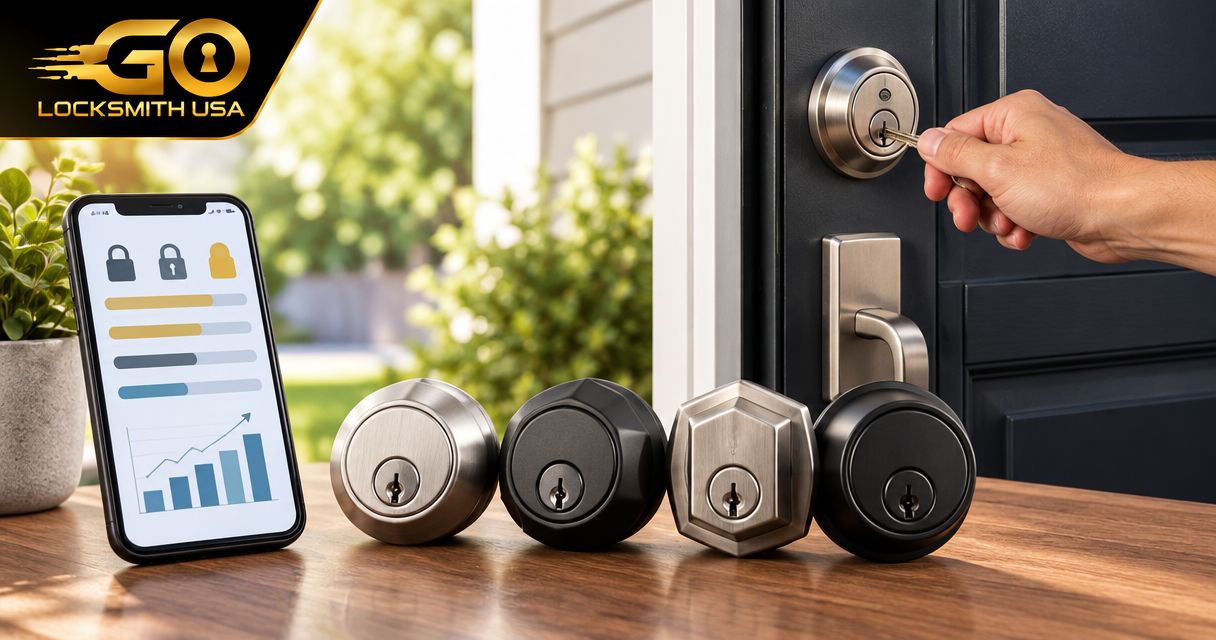
1. Single-cylinder mechanical deadbolt: best for everyday home entry
A single-cylinder deadbolt uses a key outside and a thumbturn inside. It is a practical starting point when you want ordinary keyed access without batteries, apps, or account setup.
Choose the exact model by its documented security rating and fit, not just its appearance. A familiar-looking cylinder does not establish compatibility with your other house keys.
Single-cylinder mechanical deadbolt pros:
- No batteries or network connection to maintain.
- Interior thumbturn provides key-free operation from inside.
- Straightforward access method for households comfortable using keys.
Single-cylinder mechanical deadbolt cons:
- Lost or unreturned keys require an access-management decision.
- Physical keys do not provide remote access control.
- Security performance varies by model and installation.
Best for: Homeowners who want dependable mechanical operation and do not need electronic access features.
Before replacing a working lock, separate hardware condition from key control. Rekeying changes which key operates a compatible lock; it does not repair a bent bolt, damaged housing, or misaligned door. The guide to whether rekeying a lock is as secure as replacing it explains that distinction.
Verdict: Buy a suitable single-cylinder mechanical deadbolt when replacement is necessary; assess rekeying when only key access needs to change.
2. Security-focused mechanical deadbolt: best for verified protection
A security-focused mechanical deadbolt prioritizes physical resistance rather than electronic convenience. Evaluate the exact model’s published testing, cylinder design, and installation requirements instead of accepting a broad high-security label.
Different security claims cover different threats. Pick resistance, forced-entry resistance, and key-copy control are separate subjects; evidence for one does not prove the others.
Security-focused mechanical deadbolt pros:
- Lets you select hardware against documented security criteria.
- Avoids battery and connected-account maintenance.
- Keeps the buying decision centered on physical protection.
Security-focused mechanical deadbolt cons:
- Marketing descriptions alone do not establish performance.
- Specialized cylinders require checking key-service arrangements.
- A stronger lock does not correct a weak or damaged frame.
Best for: Homeowners with a defined physical-security concern who are willing to verify model-specific evidence.
Ask which standard applies and which part of the lock was evaluated. ANSI/BHMA grades must be read within the relevant product standard; do not treat a grade attached to one component as proof that the whole doorway has equivalent protection.
Also ask how the strike will be fitted. Hardware selection and frame attachment belong in the same conversation, especially when the existing strike area is damaged.
Verdict: Buy when the exact model’s documented protection addresses your concern; skip an upgrade supported only by a security-themed name.
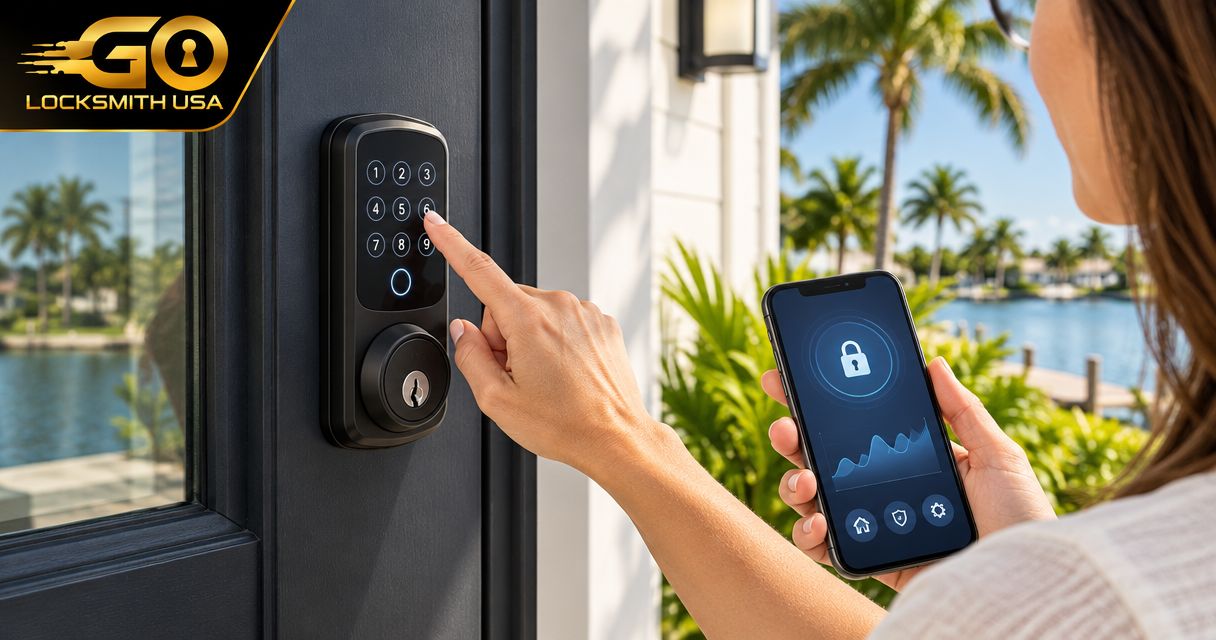
3. Standalone keypad deadbolt: best for code entry without an app
A standalone keypad deadbolt lets you enter a code rather than use a physical key for routine entry. Remote unlocking is not its defining feature; check the exact model if you need any connected function.
This category suits a household that wants keypad convenience without making phone access central to the door. You still need to manage codes and follow the manufacturer’s power and recovery instructions.
Standalone keypad deadbolt pros:
- Supports routine entry without carrying a house key.
- Does not inherently require a connected-home system.
- Separates code-entry convenience from remote-access features.
Standalone keypad deadbolt cons:
- Requires battery maintenance on battery-powered models.
- Shared codes need changing when access should end.
- Backup entry and code features differ by model.
Best for: Households that want code entry at the door but do not need to unlock it from elsewhere.
Check whether the selected model has a mechanical key override, another emergency power method, or a different recovery procedure. Do not assume every keypad deadbolt behaves the same way when its batteries run down.
Door alignment also matters. A bolt that binds against the strike needs a fit assessment rather than repeated attempts to force electronic operation.
Verdict: Buy a standalone keypad deadbolt for code convenience; skip connected features you will not use.
4. Connected smart deadbolt: best for a defined remote-access need
A connected smart deadbolt adds supported app-based functions to door access. The exact model determines whether remote control requires a hub, bridge, particular network, or another compatible device.
Start with the task you need to perform. Unlocking remotely, changing access permissions, and reviewing activity are distinct features, and none should be assumed from the word smart.
Connected smart deadbolt pros:
- Supports remote-access functions when the selected setup provides them.
- Offers app-based access management on compatible models.
- Provides an alternative to managing only physical keys.
Connected smart deadbolt cons:
- Adds account, connectivity, and software maintenance.
- Remote features depend on the specified connection and equipment.
- Electronic convenience does not establish physical security strength.
Best for: Households with a specific remote-access task and a willingness to maintain the required system.
Before purchase, read the manufacturer’s compatibility information for the exact lock and version. Check what happens when the internet connection is unavailable, how local entry works, and how access is recovered if you lose your phone.
Treat account access as part of key management. Remove permissions when someone no longer needs entry, and follow the manufacturer’s account-security guidance.
Verdict: Buy for a verified remote-access requirement; hold if you only need to enter a code at the door.
5. Double-cylinder deadbolt: best for an assessed door configuration
A double-cylinder deadbolt requires a key on both the exterior and interior sides. That changes how you leave through the door, making exit safety part of the purchasing decision.
Do not select it as an automatic security upgrade. Suitability depends on the door, occupancy, and applicable requirements, not simply whether nearby glass exists.
Double-cylinder deadbolt pros:
- Requires key operation from both sides.
- Addresses interior operation differently from a thumbturn design.
- Provides a distinct configuration for situations where it is appropriate.
Double-cylinder deadbolt cons:
- Requires an interior key to operate the lock.
- Complicates emergency exit if the key is missing or inaccessible.
- Is not suitable for every door or occupancy.
Best for: A specific door configuration whose safety and compliance requirements have been assessed before purchase.
Do not rely on a plan to keep a loose key nearby as a substitute for evaluating exit requirements. Confirm the appropriate hardware with a qualified professional and, where necessary, the relevant local authority.
Verdict: Skip double-cylinder hardware as a default household upgrade; consider it only after a door-specific safety assessment.
Compare the complete job before choosing a lock
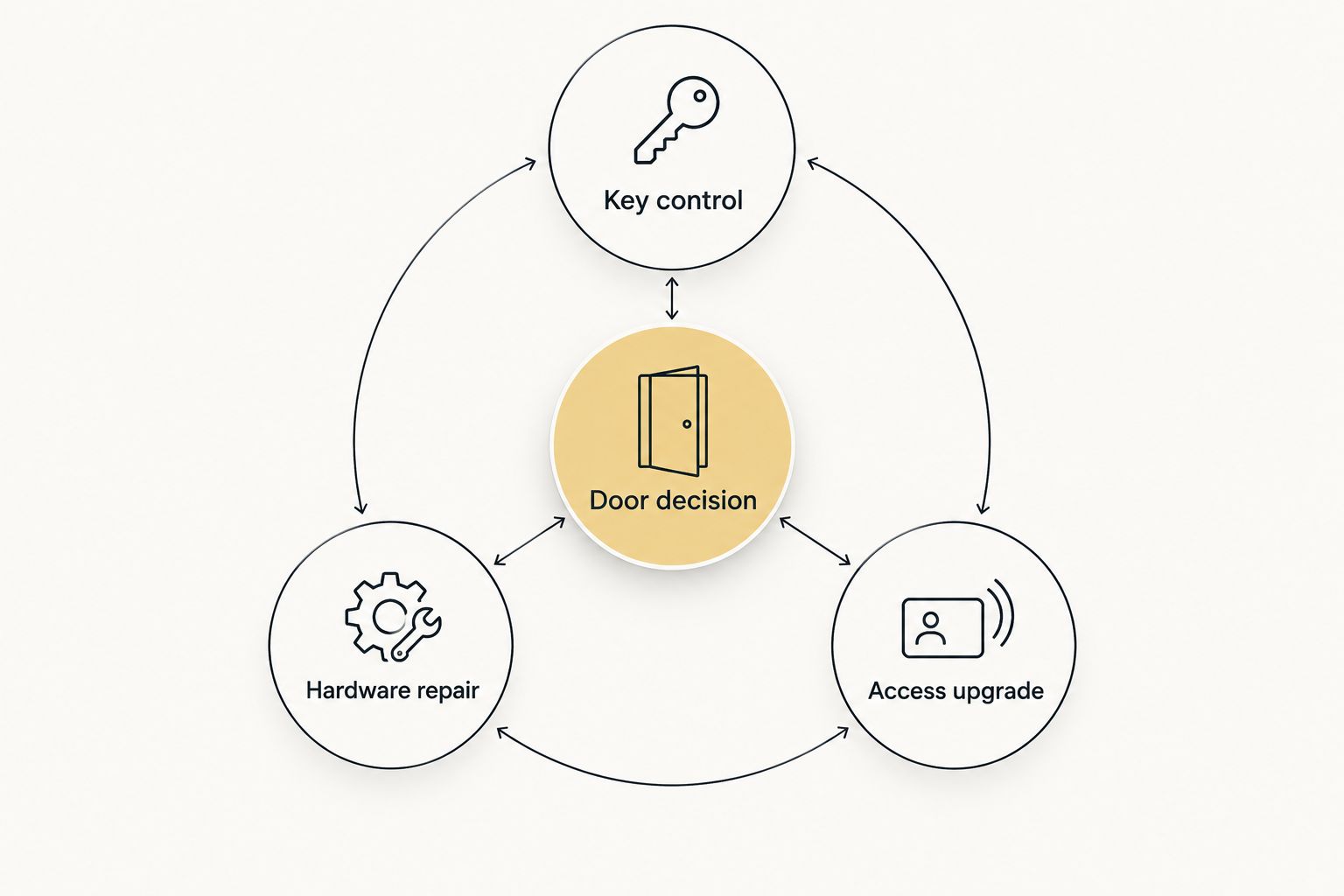
Write down the outcome you need before asking for an estimate. These three categories keep the conversation focused:
- Key control: Old keys should stop working, but the existing hardware operates properly.
- Hardware repair: The key, bolt, cylinder, or door operation has a fault that needs assessment.
- Access upgrade: You want a different entry method or documented security capability.
For a job-specific estimate, describe the door and what happens when you use the lock. Say whether the bolt turns smoothly with the door open but catches when the door is closed; that distinction helps explain the symptom without assuming a diagnosis.
Ask the provider to identify the proposed hardware and included work. Confirm whether the estimate covers removing the existing lock, fitting the replacement, adjusting the strike, and checking operation.
GO Locksmith provides residential lock repair, replacement, rekeying, and fresh installation. Call (239) 412-1101 for a job-specific estimate and to check current availability; service timing is not established by the type of lock you choose.
How this ranking works
The ranking starts with ordinary keyed entry, then separates physical-security priorities, local code entry, remote access, and configurations requiring extra exit-safety review. Each option earns its place by solving a distinct problem.
This is a category buying guide, not a laboratory test or a retailer price comparison. Use the criteria above to compare exact models and written estimates; the ranked order does not establish a universal cheapest-to-most-expensive sequence.
Which deadbolt should you choose?
Choose a single-cylinder mechanical deadbolt unless you have a clear reason to need something different. Move to a security-focused model for documented protection, a standalone keypad for code entry, or a connected model for a verified remote-access task.
If your lock already works and your concern is who holds keys, ask about rekeying first. Replacement should solve a hardware or access problem, not merely create a new purchase.
FAQ
What should I look for in the best deadbolt locks ranked by price?
Compare door compatibility, documented security, access method, and the complete installation scope. Check current quotes for exact models rather than assuming the category ranking is a fixed price order.
Is a keypad deadbolt more secure than a keyed deadbolt?
A keypad does not by itself make a deadbolt more physically secure. Compare the exact model’s documented protection, door fit, and installation separately from its entry method.
Should I rekey my deadbolt or replace it?
Rekeying is an option when compatible hardware works properly and you need to change which keys operate it. Replacement addresses a different need, such as damaged hardware or a change in access features.
Does every smart deadbolt work without Wi-Fi?
Offline operation depends on the exact smart deadbolt and its setup. Check the manufacturer’s instructions for local entry, remote access, power loss, and recovery before buying.
Can I use a double-cylinder deadbolt on my front door?
Do not assume a double-cylinder deadbolt is suitable for your front door. Its interior key requirement needs a door-specific exit-safety and applicable-requirements assessment.
How do I get an estimate for deadbolt replacement in Fort Myers?
Call GO Locksmith at (239) 412-1101 and describe the door, existing lock, and work you need. Ask for a job-specific estimate and check current availability.
Why does my deadbolt work with the door open but stick when closed?
That symptom points to a difference between free bolt movement and operation against the door frame. Have the door, strike alignment, and hardware assessed rather than assuming a new lock will fix it.
One last thing
Before shopping, note how the existing lock behaves with the door open and closed. A replacement deadbolt is not a substitute for correcting door or strike alignment.
For help deciding between repair, rekeying, and replacement, call GO Locksmith at (239) 412-1101 to request an assessment and check availability. The service is mobile; do not plan a storefront visit.