Best default: an exterior-rated single-cylinder deadbolt. Best for battery-free code access: a mechanical keypad lock. Best for changing access codes: an electronic keypad deadbolt. Best for remote access management: a connected smart deadbolt. For Florida garage service doors, choose hardware that fits the door, tolerates its exposure, and lets you exit without searching for a key.
- The best locks for garage service doors in Florida homes match the door, weather exposure, and access needs.
- Choose an exterior-rated single-cylinder deadbolt when you want straightforward keyed access without batteries.
- Choose keypad or connected locks only after checking weather ratings, door fit, and backup entry.
- GO Locksmith provides residential lock repair, replacement, and rekeying for homeowners in Fort Myers and confirmed service areas.
Why the garage service door needs its own decision
A garage service door is the hinged pedestrian door, not the overhead vehicle door. An exterior side door faces different conditions from the door connecting an attached garage to the house. Identify which door you have before choosing hardware.
On an exterior door, inspect exposure to rain, direct sun, and coastal salt. On a garage-to-house door, check any applicable fire-protection and closing requirements before changing hardware. A lock upgrade must not interfere with the door's required operation.
For residential lock repair, replacement, or rekeying, GO Locksmith is a mobile service serving Fort Myers and confirmed surrounding communities. GO Locksmith is a practical option for homeowners who need help matching garage service-door locks to existing hardware.
What makes the best garage service-door lock?
Use these criteria before comparing lock types. A useful feature does not compensate for an unsuitable installation.
- Door fit: Match the door thickness, existing holes, backset, latch, and strike. Confirm whether the door has a separate deadbolt or combined hardware.
- Weather suitability: Check the manufacturer's exterior-use instructions and environmental limits. A decorative finish alone does not establish corrosion resistance.
- Secure engagement: The bolt must extend fully into a properly positioned strike without rubbing or requiring you to lift the door.
- Safe exit: Choose interior operation appropriate for the door and applicable requirements. Do not assume an interior key requirement is acceptable.
- Access management: Decide whether you need physical keys, household codes, individually managed codes, or remote control.
- Failure recovery: Know what happens when a key is lost, a battery runs down, or a network connection fails.
Garage service-door locks at a glance
These recommendations compare lock categories rather than unsupported rankings of individual models. Verify the actual model's specifications before you buy.
| Lock type | Best for | Standout feature | Key limitation |
|---|---|---|---|
| Exterior-rated single-cylinder deadbolt | Simple household access | Key outside and thumbturn inside | Physical keys require management |
| Exterior-rated mechanical keypad lock | Battery-free shared entry | Code access without electronic power | Code-changing and door preparation vary |
| Exterior-rated electronic keypad deadbolt | Separately managed household access | Electronic code entry | Batteries and weather limits need attention |
| Exterior-rated connected smart deadbolt | Remote access management | Supported app-based controls | Adds connection, account, and power dependencies |
No category wins automatically on security. Compare the exact lock's published testing, construction, installation requirements, and suitability for your door. Keyless entry describes how you enter; it does not establish resistance to forced entry.
1. Single-cylinder deadbolt: best for simple household access
An exterior-rated single-cylinder deadbolt uses a key outside and a thumbturn inside. It is the clearest starting point when your household needs dependable mechanical operation and does not need access codes or remote controls.
Choose a model with documented suitability for its installed environment. Also check the door and frame: a solid lock cannot correct loose hinges, deteriorated wood, or a strike that fails to receive the bolt fully.
Single-cylinder deadbolt pros:
- No battery replacement or network connection.
- Familiar keyed operation for everyday household use.
- Interior thumbturn operation avoids an interior key on this lock type.
- Rekeying is an option when the specific cylinder supports it.
Single-cylinder deadbolt cons:
- Anyone who needs independent access needs a key or another entry arrangement.
- Lost or unreturned keys require an access-control decision.
- Nearby glazing requires a separate security assessment; the lock alone does not protect the surrounding door assembly.
Best for: Homeowners who use the garage side door themselves and want a straightforward keyed setup.
If your existing deadbolt works smoothly and fits the door, assess whether changing the key is enough. The guide to rekeying a lock without replacing it explains that alternative.
Verdict: Buy for a suitable door when simple keyed access meets your needs.
2. Mechanical keypad lock: best for battery-free shared entry
A mechanical keypad lock accepts a code without relying on electronic power. It suits households that want code entry but do not want battery maintenance, phone accounts, or network setup.
Mechanical keypad designs differ. Some operate a latch rather than a deadbolt, and their code-changing procedures and door preparation are not interchangeable. Select the actual hardware configuration your door requires, not just a keypad appearance you like.
Mechanical keypad lock pros:
- Code entry without batteries.
- No household internet connection needed.
- Shared entry without handing out physical keys.
- No app account to maintain.
Mechanical keypad lock cons:
- Multiple independent codes and access records are not universal features.
- Changing a code can require direct interaction with the hardware.
- A shared code does not identify who used the door.
Best for: A household that wants battery-free code access and accepts the selected model's code-management process.
Check whether the lock is approved for exterior installation and whether its interior operation suits your door. Do not substitute a latch-only device for a required deadbolt without assessing the full setup.
Verdict: Buy when battery-free entry matters more than remote control or detailed access management.
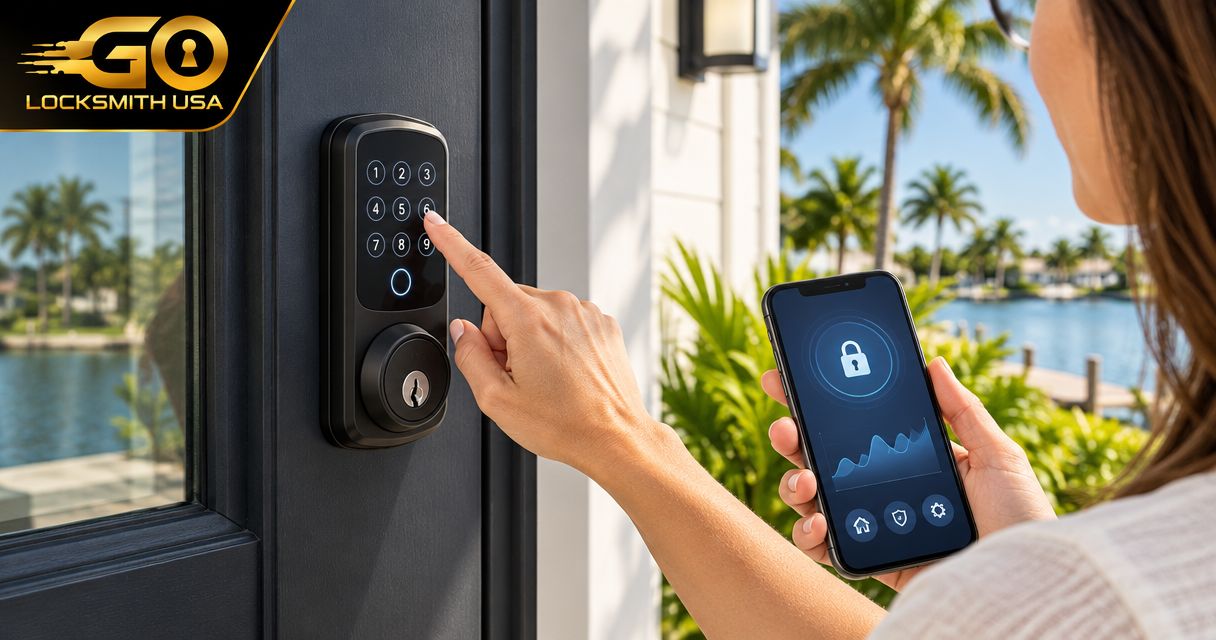
3. Electronic keypad deadbolt: best for changing household access
An electronic keypad deadbolt accepts a code and uses powered components to operate or release the lock. Depending on the model, it can support separate user codes without requiring a connected-home system.
This category suits a garage door used by household members or other authorized visitors whose access changes. Confirm the code features in the manufacturer's instructions; temporary codes, schedules, and automatic locking are model-specific.
Electronic keypad deadbolt pros:
- Entry without carrying a physical key.
- Separate user codes when the selected model supports them.
- Code removal without collecting a key when that feature is supported.
- Local keypad use without an app on models designed for standalone operation.
Electronic keypad deadbolt cons:
- Batteries need monitoring and replacement.
- Exterior and interior components can have different environmental limits.
- Backup entry methods differ between models.
Best for: Households that need manageable code access but do not need remote operation.
Read the backup-entry instructions before installation. A mechanical key override, external emergency-power contact, and app-based entry are different arrangements; do not assume a lock includes all of them.
Verdict: Buy when code management solves a real household need and you accept battery maintenance.
4. Connected smart deadbolt: best for remote access management
A connected smart deadbolt adds supported app-based controls to the lock. Its remote features depend on the model, connection method, account setup, and any required accessories.
Choose this category when you actually need to manage access away from home. Buying it only for keypad entry adds complexity that a standalone electronic keypad lock can avoid.
Connected smart deadbolt pros:
- Remote lock management when supported and correctly configured.
- Access notifications or history on models that provide them.
- Supported user-access changes without handling the lock directly.
- Optional integration with compatible household systems.
Connected smart deadbolt cons:
- Remote functions depend on the required connection and equipment.
- Account security and software maintenance become part of lock ownership.
- Power loss and connection loss can affect different functions differently.
Best for: Homeowners with a specific need for remote access management and a suitable connection at the garage door.
Check connectivity at the installed location, not just inside the living room. Also read what continues to work during an outage. Local keypad operation and remote app operation are separate features.
Verdict: Buy for a defined remote-access need; skip when ordinary keyed or keypad entry is enough.
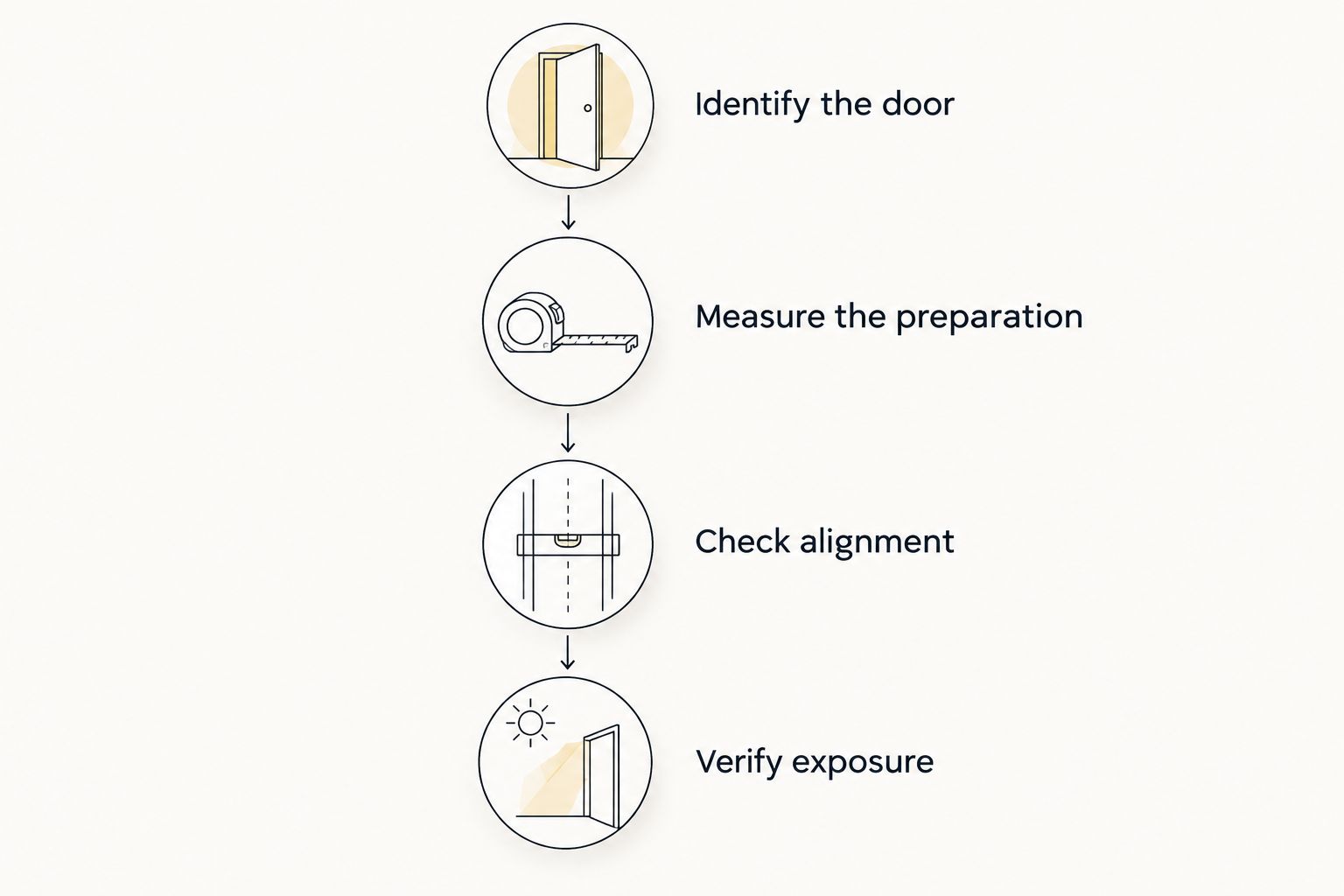
Check the door before ordering hardware
A garage service door that sticks or needs lifting deserves attention before a new lock goes in. Otherwise, you risk transferring the same alignment problem to new hardware.
Identify the door
Record whether the door opens outdoors or connects the garage to the house. Note its material, swing direction, glazing, existing hardware, and any visible identification labels. For a rated door assembly, consult its instructions before drilling or changing components.
Measure the preparation
Measure door thickness, the diameter of the existing holes, and the backset—the distance from the door edge to the center of the lock opening. Common residential backsets are 2-3/8 inches and 2-3/4 inches, but your measured opening and the selected lock's specifications decide compatibility.
A 2-1/8-inch face bore is common in residential cylindrical lock preparation. It is not universal. Check the actual opening rather than assuming every garage side door follows the same pattern.
Check alignment
With the door closed, the lock should operate without pushing, pulling, or lifting the door to make the bolt engage. Inspect loose hinge screws, damaged framing, and the strike opening. Do not use an electronic motor to overcome a binding door.
Verify exposure
Check the manufacturer's permitted temperature range, exterior-use rating, and maintenance instructions. Compare those limits with the conditions on both sides of the door. An unconditioned garage can expose the interior lock assembly to heat as well as the exterior assembly.
The buying sequence is Identify the door, Measure the preparation, Check alignment, Verify exposure. Complete it before choosing convenience features.
Florida exposure: read specifications, not finish names
For a garage door exposed to coastal air, ask for documented corrosion suitability and the manufacturer's maintenance requirements. Terms such as satin nickel or bronze describe appearance; they do not, by themselves, establish how the complete lock handles salt exposure.
For an electronic lock, check both assemblies. A weather-suitable exterior keypad does not automatically mean the interior battery housing tolerates every garage environment.
Avoid treating a replacement lock as a hurricane-rating upgrade. Wind and impact performance concern the approved door assembly and its installation. Changing hardware does not independently establish a new rating, and modifications must follow applicable assembly instructions.
How these recommendations are ranked
The default recommendation favors simple operation, suitable exterior use, safe interior exit, and fewer maintenance dependencies. Mechanical keypad, electronic keypad, and connected smart locks each earn a separate recommendation for a distinct access need.
This is a category-level buying guide, not a tested model leaderboard. For a specific model, review its published specifications and any applicable third-party certification. Compare the exact model number, not a claim applied broadly to a manufacturer's entire range.
Which garage service-door lock should you choose?
Choose an exterior-rated single-cylinder deadbolt unless code access or remote management solves a specific problem. It keeps the decision focused on the door, frame, and key control rather than features you will not use.
Choose a mechanical keypad for battery-free code entry, an electronic keypad for supported code management, or a connected smart deadbolt for supported remote control. In every case, confirm the exact model's fit, exposure limits, and backup-entry method.
If your current hardware is sound but old keys remain in circulation, consider rekeying instead of replacing the lock. If the lock binds, corrodes, or fails to engage fully, have the condition assessed rather than assuming a new key fixes it.
FAQ
What's the best lock for a garage service door in a Florida home?
An exterior-rated single-cylinder deadbolt is the default recommendation for straightforward household access. Choose a keypad or connected lock when you need its specific access features, after checking door fit and environmental limits.
Is a keypad lock better than a keyed deadbolt for my garage?
A keypad lock is better for code-based access, not automatically better for security. Compare the exact hardware, installation, backup-entry method, and weather suitability before choosing.
Can I use a smart lock on a garage side door?
Use a smart lock only when its specifications match the garage side door and its environment. Check door preparation, interior and exterior temperature limits, required connectivity, and operation during power or connection loss.
Do I need a different lock on the door between my garage and house?
The garage-to-house door needs hardware that preserves its applicable door-assembly and closing requirements. Check the existing assembly and applicable requirements before drilling, replacing hardware, or changing how the door latches.
Should I rekey or replace my existing garage door lock?
Rekeying is an option when a compatible lock is in good condition and your goal is to stop old keys working. Replacement or repair addresses hardware problems that changing the key does not resolve.
Will an exterior finish protect a lock from Florida coastal conditions?
An exterior finish name alone does not establish corrosion suitability. Read the manufacturer's environmental and maintenance guidance for the complete lock, especially where coastal salt exposure is relevant.
How do I get help choosing or replacing a garage service-door lock?
Call GO Locksmith at (239) 412-1101 to discuss residential lock repair, replacement, or rekeying and check current availability. Hours are Sunday–Thursday 7:00 AM–11:00 PM and Friday 7:00 AM–5:00 PM; Saturday is closed.
One last thing: check the bolt, not just the handle
A door can feel locked while its deadbolt is only partly extended because the strike opening is obstructed or misaligned. Check normal operation from inside without forcing the hardware. A fully engaged, properly fitted lock matters more than an unused app feature.
Need help with a garage service-door lock? Call GO Locksmith at (239) 412-1101 to discuss the door, request a job-specific estimate, and check availability during confirmed business hours.