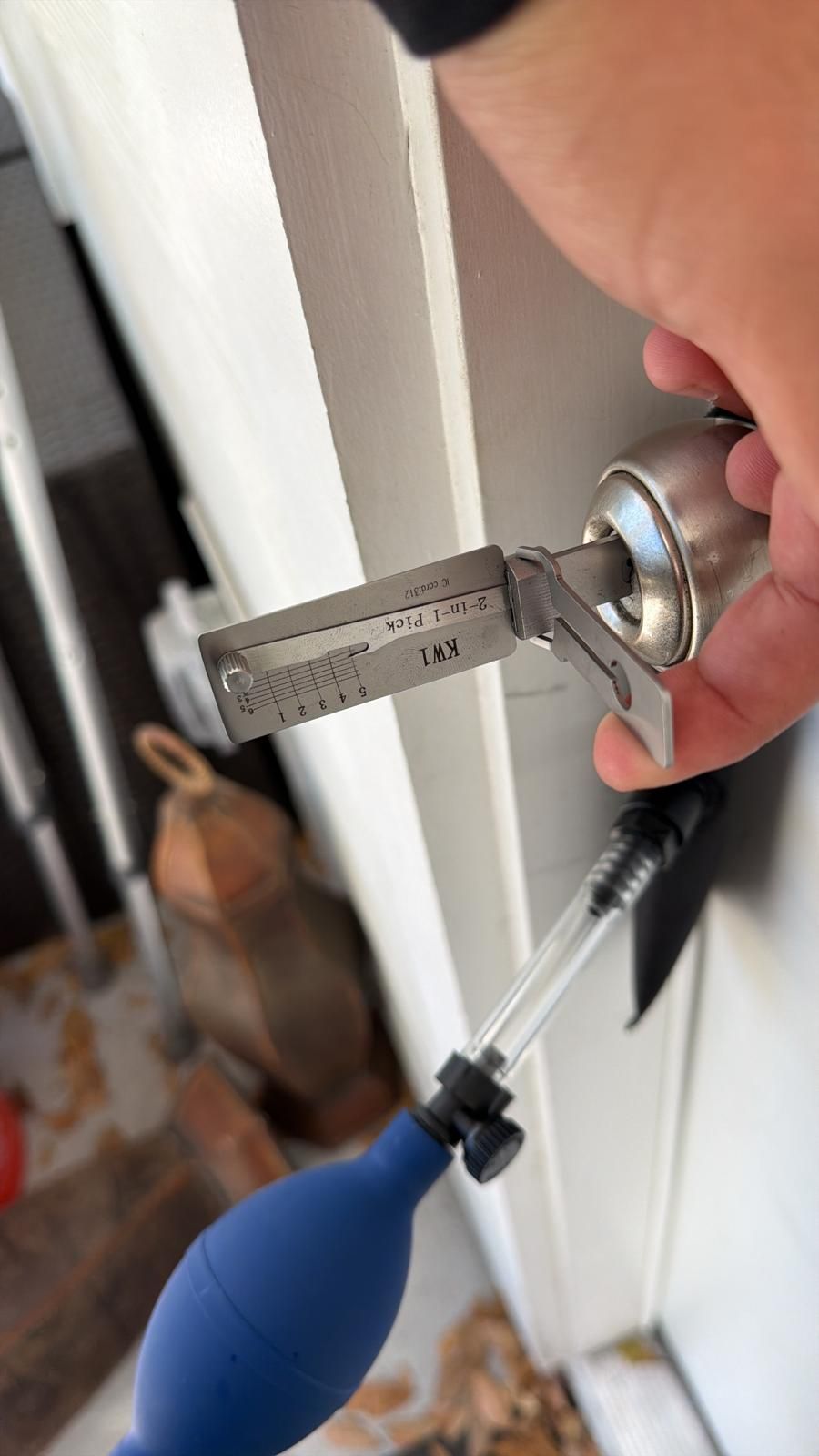
Yes, a locksmith can often fix a jammed lock without replacing the whole lock when the cause is door alignment, installation, or a serviceable component. Replacement becomes the right choice when the hardware is damaged, unsuitable, or cannot be restored to reliable operation.
- A locksmith can fix a jammed lock without replacing it when the cause is repairable.
- A lock that works with the door open but binds when closed needs an alignment check.
- Do not force the key or keep cycling a struggling electronic lock.
- Fix the cause, then test the lock with the door open and closed.
Can a locksmith fix a jammed lock without replacing it?
A jam does not automatically mean you need a new lock. The diagnosis should distinguish the key, cylinder, bolt, door alignment, and—in an electronic lock—power and setup.
GO Locksmith provides mobile locksmith services for homes and businesses across Fort Myers and Southwest Florida. Describe the symptom before arranging a visit so the service starts with the problem, not an assumption about which part to replace.
| What you notice | What should be checked | Does it prove the whole lock needs replacement? |
|---|---|---|
| The lock works open but binds closed | Door and strike alignment, bolt clearance | No |
| One key sticks but another works | The troublesome key and the cylinder | No |
| The key will not insert normally | Correct key, obstruction, key damage, cylinder condition | No |
| The thumb turn binds even with the door open | Installation and the lock mechanism | No, but mechanical diagnosis is needed |
| A keypad lock reports a jam | Bolt travel, alignment, batteries, installation, model setup | No |
| There is visible break-in damage | Lock, door, frame, and strike condition | Damage can require replacement and additional repair |
These are assessment categories, not a remote diagnosis of your particular door. A symptom points to the next check; it does not establish the cause by itself.
Why this matters
Replacing a lock that is binding against the door frame can leave the new lock with the same problem. The bolt still has to travel freely into the correct opening.
The opposite mistake is trying to preserve hardware that has failed. A lock that occasionally cooperates after hard twisting is not a dependable repair outcome.
For a repair decision, set the goal clearly: the door closes normally, the lock operates without force, and the provider explains any remaining fault. Keeping the old hardware is useful only if the result is reliable.
What should you do first when the lock jams?
Stop applying force. If you are already inside and the door is open, keep a safe way back in while arranging checks. Do not repeatedly close a door that you cannot confidently reopen.
If you are locked out, do not try to create access by forcing the key, prying the frame, or taking apart unfamiliar hardware. Give the locksmith the symptoms you can observe safely.
If someone is trapped or cannot use a required exit, treat the situation as a safety problem rather than ordinary home maintenance. Contact emergency assistance when there is immediate danger.
Describe the symptom precisely
The words 'the lock is broken' hide useful information. Say what actually happens:
- The key inserts but will not turn.
- The key turns but the bolt does not move.
- The thumb turn is stiff.
- The bolt scrapes when the door closes.
- The lock works with the door open but not closed.
- The keypad responds, but the bolt stalls.
Also describe when the issue started. A problem after new installation deserves a different first check from a problem after a door was hit or a key snapped.
Do not guess which part failed. A short, accurate description gives the technician more to work with than a diagnosis borrowed from a different lock online.
Why does a lock work with the door open but jam when closed?
That pattern calls for an alignment and clearance check. With the door open, the bolt is not trying to enter the strike opening in the frame. With the door closed, that contact becomes part of the test.
The provider should inspect where the bolt meets the strike, how the door hangs, and whether the bolt can travel fully. A latch that does not hold the door in the proper position can also affect the deadbolt's path.
If the bolt moves freely in open air but binds at the frame, assess the door fit before condemning the lock. That is a useful screening observation, not permission to reshape rated hardware or drill the frame yourself.
Do you have to push or lift the door to lock it?
Tell the locksmith. A lock should not depend on a special push, pull, or lift that only one household member knows.
That workaround is evidence that the door-and-lock relationship needs attention. It does not tell you whether the required work is a hinge adjustment, strike correction, other door work, or something inside the lock.
For a service visit, ask the technician to demonstrate normal operation without the workaround. 'It works if you lift the handle just right' is not a clear resolution of the complaint.
What if the key is the problem?
If you have another authorized working key, explain whether it behaves differently. Do not force either key; the comparison is useful only if it can be made safely.
One troublesome key and one smoothly working key point toward examining the key as well as the lock. Bent, damaged, or worn keys deserve assessment before a whole-lock replacement decision.
If every key binds, the cylinder or the installation still needs checking. The provider should explain what the comparison showed rather than immediately prescribing another duplicate.
What if a piece of key is stuck inside?
Stop trying to push another key into the opening. Describe whether part of the broken key is visible and keep the broken pieces for the technician to inspect.
Broken-key extraction and restoring the lock's operation are separate parts of the job. Removing the fragment does not prove that the key or cylinder that caused the break is still suitable to use.
Ask for the lock to be checked after extraction. Otherwise, the next key can encounter the same unresolved problem.
What if the lock jams even with the door open?
A jam with the door open takes frame contact out of that specific test, so installation and internal operation become important checks. The locksmith can assess whether the parts are fitted correctly and whether the mechanism is damaged.
Do not loosen or remove unfamiliar fasteners just because an online video shows a similar lock. The correct adjustment depends on the actual model and how it is installed.
If the problem began immediately after installation, have the installation checked against the manufacturer's instructions. A replacement bought before that check can repeat the same mistake.
If the lock has visible damage or no longer controls the bolt reliably, repair or replacement needs a direct assessment. Do not accept intermittent operation as proof the hardware is safe to keep.
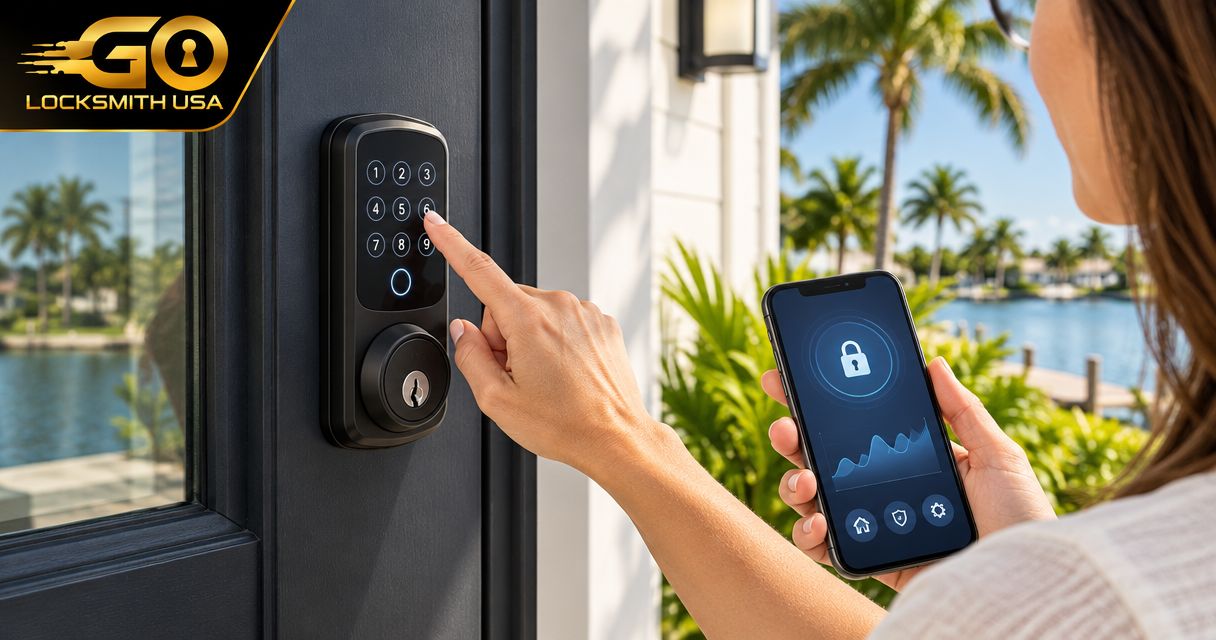
Can a keypad or smart-lock jam be fixed without replacement?
Yes, when the fault is alignment, installation, batteries, or a setup issue that can be corrected using the model's instructions. A jam warning does not identify the cause on its own.
Use the installed model's instructions to check the recommended batteries and setup procedure. Do not apply a reset procedure from a different device.
A sensible electronic-lock assessment separates:
- Manual bolt operation.
- Door and strike alignment.
- Battery type and condition specified by the manufacturer.
- Wiring or assembly condition where applicable.
- The model's documented setup process.
- Any damaged internal component.
Keep backup entry available before testing an electronic lock. Do not erase codes or reset a device casually; a reset can change access settings without fixing mechanical resistance.
When does replacement become the better answer?
Replacement is the better answer when the installed hardware cannot be restored appropriately or no longer suits the door. The recommendation should be tied to a specific fault, not simply to age or the inconvenience of a jam.
Ask the provider to explain what is damaged and whether the proposal covers the cylinder, the lock body, the complete hardware set, or the door itself. Those are different scopes.
| Option | Best for | Useful result | Limitation |
|---|---|---|---|
| Alignment or installation correction | Serviceable hardware that binds because of its fit | Restores a clear bolt path and correct operation | Does not repair a broken internal mechanism |
| Component repair or replacement | A diagnosed, serviceable part failure | Addresses the failed part without automatically changing everything | Depends on suitable parts and the hardware's condition |
| Complete lock replacement | Hardware that cannot be restored reliably or is unsuitable | Provides a compatible working lock | Does not automatically repair the door or frame |
| Door or frame repair | Damage or fit problems outside the lock | Addresses the structure or alignment causing trouble | Does not change who holds existing keys |
GO Locksmith is a mobile locksmith option for Fort Myers property owners who need a lock problem assessed at the entrance. Its residential services include house lockouts and lock repair, replacement, and rekeying; confirm the repair scope for your hardware before approving work.
Why does the repair plan vary?
The repair plan follows the actual cause and the type of entrance. A basic residential deadbolt, commercial door assembly, and smart lock do not share one repair recipe.
The relevant factors are:
- Where it binds: open-door and closed-door behavior give different information.
- Key behavior: a single troublesome key differs from every key binding.
- Installation history: a new installation needs its fit and assembly checked.
- Hardware condition: impact damage and failed parts can limit repair options.
- Door requirements: rated or managed entrances need compatible work.
- Electronic features: power and setup checks supplement, rather than replace, mechanical checks.
For a hurricane-rated door, do not make unapproved hardware changes to solve a jam. The deadbolt guide for hurricane-prone homes explains why the door assembly needs attention as a whole.
Will rekeying fix a jammed lock?
Not automatically. Rekeying changes which key a cylinder accepts. It does not correct every installation problem, replace every broken mechanism, or move a strike opening into alignment.
If you also need old keys disabled, explain that as a separate goal. A repair can restore operation while leaving the old keys valid; a rekey changes access while leaving an unrelated mechanical problem unresolved.
GO Locksmith's rekeying service describes changing access without replacing suitable existing locks. For a jammed entrance, agree on the repair need first and the key-change need separately.
How do you know the repair is complete?
Ask for a demonstration with the door open and then closed. The key or thumb turn should move the bolt without the forcing or door-lifting workaround that caused concern.
For an electronic model, test the documented everyday entry method after the mechanical checks. Keep the door open and backup access available during initial tests so a failed setup does not create a lockout.
Use this handover checklist:
- The original symptom has been reproduced or explained.
- The provider identifies the cause and the work completed.
- The bolt extends and retracts normally.
- The closed door locks without forced positioning.
- Included electronic functions work as agreed.
- Remaining door or hardware concerns are stated plainly.
For a lock repair, a clear demonstration is more useful than a vague statement that the lock has been serviced. You should know what changed and whether another problem remains.
FAQ
Does a jammed lock always need replacement?
No, a jammed lock does not always need replacement. Door alignment, installation, and serviceable components should be assessed before deciding.
Why does my deadbolt work with the door open but not closed?
That pattern calls for a door and strike alignment check. The bolt's path into the frame can be restricted even when the lock moves normally with the door open.
Should I force the key when my lock sticks?
No, stop applying force to a sticking key. Explain the symptom to a locksmith so the key, cylinder, and lock can be assessed.
Can a locksmith remove a broken key without changing the whole lock?
A locksmith can assess whether extraction and service will preserve the existing lock. The lock should still be checked afterward for the cause of the break.
Does a smart-lock jam warning mean the motor is broken?
No, a jam warning alone does not prove motor failure. Check mechanical travel, alignment, batteries, and setup using the actual model's instructions.
Will rekeying fix a lock that jams?
Not automatically. Rekeying changes key access, while alignment faults and broken mechanisms need their own diagnosis.
How should I test a repaired lock?
Test the lock with the door open and then closed while keeping safe backup entry. Confirm normal operation without hard twisting, door lifting, or repeated electronic retries.
One last thing
Show the technician the workaround you have been using. Pushing the door, lifting a handle, or wiggling a key is useful diagnostic information, even if it feels like a small detail.
The right repair addresses the cause rather than teaching you a new workaround. Tell GO Locksmith how the entrance behaves and ask what must change for dependable everyday use.
Related guides
Need locksmith service?
Pricing depends on the specific job. Call GO Locksmith at (239) 412-1101 to check availability, request service, or ask for an estimate.
Business hours: Sunday–Thursday 7:00 AM–11:00 PM; Friday 7:00 AM–5:00 PM; Saturday closed.